- Home
- Buyer's Guides
- Product Comparisons
- Electric vs Diesel Mini Excavator: Which Is Better for Your Jobsite?
Electric vs Diesel Mini Excavator: Which Is Better for Your Jobsite?
Published on 12 February 2026
Electric mini excavators are compact excavators powered by rechargeable batteries instead of diesel engines. They have the same basic layout – boom, arm, bucket, and hydraulic system – but replace the engine with an electric motor and lithium-ion battery bank. This change means no exhaust fumes or idling noise, which can be a game-changer for indoor or urban projects. Diesel mini excavators use a traditional diesel engine to drive hydraulics and are very common on outdoor sites.
These two types are often compared because they serve similar functions but suit different needs. Contractors, rental companies, and equipment buyers commonly ask “Which one is right for me?” when considering factors like job environment, noise restrictions, running costs, and performance. This article will explain the differences between electric and diesel mini excavators across key aspects (such as power, or operator experience) and help you decide which fits your specific situation.
Quick Side-by-Side Comparison

Electric Mini Excavators – Best for…
- Indoor or urban jobs (no exhaust, very quiet)
- Jobs with noise or emission restrictions
- Lower operating costs
- Short-term use (battery run ~4–5 h)
- Environments where fumes/vibration are a concern
- Operators who value smooth, vibration-free controls
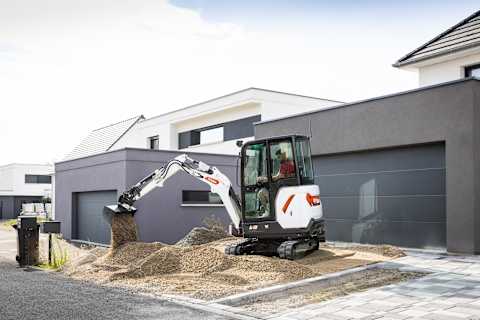
Diesel Mini Excavators – Best for…
- High-power, heavy-duty tasks (long runtime, high flow)
- Remote, continuous, or long-duration work (quick refueling)
- Wide size range for any project
- Higher digging force and lift capacity
- Contractors needing heavy attachments and power
What Is an Electric Mini Excavator?

What Is an Electric Mini Excavator?
An electric mini excavator is a small tracked excavator powered by an on-board battery rather than a diesel engine. The battery (usually lithium-ion) supplies electricity to an electric motor that runs the hydraulic pumps. In practice, this means zero emissions and much lower noise during operation. Operators often start an electric mini with a push-button switch instead of a key, and enjoy smoother, vibration-free digging.
Typical applications include indoor demolition, basement construction, and other confined or noise-sensitive jobs. They are often chosen for hospital or school construction, renovations, and urban projects where exhaust fumes and engine noise are unacceptable. Because of their zero-emission design and low noise, they are also used in places like zoos or warehouses, where disturbing wildlife or occupants must be avoided.
Electric mini excavators are best-suited for shorter shifts or moderate-duty projects. Current battery technology typically provides around 4–5 hours of runtime on a full charge. After that, the machine needs to recharge (often overnight or during breaks). Many electric models can recharge to 80% capacity in about one hour using a fast charger. In practice, operators plan their work to fit these limits.
Electric Mini Excavator – Ideal Uses:
- Contractors or rental customers focusing on indoor or urban jobs
- Projects with strict noise/emission rules
- Tasks that fit within a battery charge
- Locations with easy access to power
- Situations where minimizing daily fuel and maintenance costs is a priority
What Is a Diesel Mini Excavator?
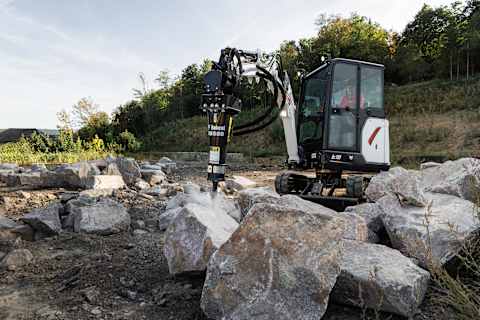
What Is a Diesel Mini Excavator?
A diesel mini excavator is a compact excavator driven by a diesel-fueled engine. It has the same boom, arm, and hydraulic system as the electric model, but the engine generates the power. These machines are common on construction sites because they can run continuously as long as they have fuel.
Diesel mini excavators are workhorses for outdoor jobs. They handle large projects like land clearing, trenching, grading, and landscaping. Since they use diesel fuel, they are not limited by battery life; a quick refuel keeps them going all day. They are also widely used in equipment fleets because contractors know they deliver reliable, high hydraulic performance for demanding tasks.
Diesel excavators come in a wide range of sizes, from 1 tonne up to 10 tonnes in some models. Larger models provide higher breakout and lift forces, ideal for demanding digging and lifting. On the downside, they emit exhaust fumes and engine noise, which prevents indoor use. Modern diesels (like Bobcat’s R2-series) use efficient Stage V engines to manage emissions, but they still require regular maintenance (oil changes, filters, etc.).
Diesel Mini Excavator – Ideal Uses:
- Users who need maximum digging and lifting power for heavy-duty work
- Contractors on long-duration outdoor projects, farms, roadwork, and all applications where emission or noise limits are not the top concern
- Preferred when multiple large excavators are needed on site.
Head-to-Head Comparison
Use Environment & Jobs
- Electric: Excellent for noise-sensitive or enclosed environments. With no exhaust fumes and very low noise, electric mini excavators can operate in basements, hospitals, schools, and urban areas. Their compact design (often zero-tail-swing) and retractable tracks help them fit through standard doorways.
- Diesel: Suited to open-air or wide-open work. Diesel mini excavators generate engine noise and exhaust fumes, so they’re typically used outdoors. They excel on large landscaping, excavation, and infrastructure sites. Since they can refuel and run continuously, they handle unpredictable job timelines better than battery-limited machines.
Example: Pouring concrete in a dense city block? The electric mini excavator won’t disturb neighbors or violate emissions rules. Building a road or digging a large foundation on a rural site? The diesel mini excavator can keep going as long as needed.
Power, Torque & Performance
- Electric: Electric motors deliver instant torque and smooth control, so an electric mini excavator can feel responsive at low power settings. However, electric mini excavators can struggle if you demand more power than their class provides, since there are few electric models available yet.
- Diesel: Diesel mini excavators usually offer higher absolute power with powerful engines and hydraulic pumps. They are better for very tough digging – for example breaking clay, removing large rocks, or lifting heavy debris – because they can deliver sustained high hydraulic flow. In Bobcat’s new R2-Series, for instance, the engines and hydraulics are beefed up to give even more engine power for improved digging performance. Diesel’s longer continuous output makes it more reliable under full load.
Example: For grading soft soil or working around shallow trenches, an electric mini excavator can do the job with finesse. But for continuous trenching in hard ground or constant rock-breaking, a larger diesel machine will outperform and not overheat or run out of power.
Speed, Maneuverability & Size
- Electric: These machines often have retractable undercarriages for tight access. The Bobcat E10e, for example, narrows to just 71 cm wide. They typically have zero-tail-swing designs too, letting the cab rotate in place without rear overhang. Travel and swing speeds are similar to diesels (many have two-speed drives), but the electric’s quiet motor means the operator can better hear site sounds. The slim profile is a big advantage in indoor or confined work.
- Diesel: Diesel mini excavators come in three tail-swing types: conventional, zero-tail, and zero-house swing. Conventional models have the rear extending beyond the tracks, which gives extra counterweight (and lift) but limits rotation near walls. Bobcat also offers zero-tail and zero-house models, so you can choose based on the site. On the ground, diesel’s weight can give better traction on loose soils. All minis (electric and diesel) typically have features like Auto Idle (auto engine down-shift) to save fuel. When transporting, diesel minis are generally heavier and may require a larger trailer, but models with retractable tracks can also shrink their width for road.
Note: In general, electric and diesel mini excavators are similarly nimble. Electric machines’ retractable tracks make them slightly more compact, but diesel machines with zero-tail swing can also work in tight spots. Choose the configuration that matches your doorway and swing clearance requirements.
Operating Costs & Maintenance
- Electric: Electricity is usually cheaper than diesel fuel, so daily “fuel” costs are lower. Maintenance can also be simpler: electric minis have no engine oil, no fuel filters, and no exhaust aftertreatment to service. There are fewer moving parts and no spark plugs or injectors, which translates to less potential for breakdown. Bobcat’s E10e, for example, uses sealed maintenance-free batteries and electric motors that rarely need service. The main service items are hydraulic fluid checks and lubrication points.
- Diesel: Diesel excavators have known service requirements: frequent oil and filter changes, injector servicing, and eventually exhaust system upkeep. Fuel costs are higher. Even though modern engines are quite reliable, components like turbochargers or DPFs (diesel particulate filters) do need occasional attention (Bobcat’s R2-series avoids DPF entirely, reducing maintenance). Over thousands of hours, the maintenance bills on diesel machines can add up (more belts, filters, etc.) compared to an electric.
Example: If your machine runs part-time on weekend jobs, an electric mini excavator might never need an oil change and uses little power. On a full-time highway project, you’ll continually pay for diesel and oil changes. Bobcat’s Machine IQ telematics can help track both fuel use and maintenance needs for whatever powertrain you choose.
Versatility & Attachments
- Electric: Electric mini excavators can use nearly all the same hydraulic attachments as diesel models: buckets, augers, breakers, grapples, etc. The attachment coupling is identical. The main difference is planning for battery use. Running a heavy-duty attachment (like a large hydraulic hammer) continuously will drain the battery faster, so you may need to work in shorter bursts or swap machines mid-job. For light to medium attachments, performance is on par with a same-size diesel. Having an electric machine in your fleet means you still get the benefit of versatile attachments without modifications.
- Diesel: Diesel machines shine with heavy or extended attachment use. They can supply continuous high-flow hydraulics, making breakers and augers work long enough without pausing.In general, if you rely on attachments heavily (especially outdoors), diesel offers unlimited runtime (just refuel) whereas electric requires you to manage battery life.
Scenario: Using a bucket, grapple, or small auger is easy on either machine. If you need to jackhammer for hours or move big quantities of material, diesel will keep going, while an electric might require downtime to recharge.
Comfort, Controls & Experience
- Electric: Operating an electric mini excavator has several advantages for operator comfort. The cab stays quieter, reducing fatigue, while you also avoid diesel fumes and odor. Electric machines usually start with a switch, and controls can feel very smooth (instant throttle response from the motor). The Bobcat E10e, for instance, has the same cab layout as its diesel counterpart, but with a calmer environment and easy joystick handling. Reduced vibration also means less strain on the operator’s arms and back.
- Diesel: Modern diesel mini excavators offer comfortable cabs with features like climate control. The Bobcat R2-Series has a deluxe seat to make long shifts more pleasant. You will hear engine noise and feel some vibration, though insulation and dampers help. Many operators are accustomed to the “feel” of diesel torque when digging. A possible downside can be engine heat, but with Bobcat’s Auto Idle and advanced climate systems, this is mostly mitigated.
Transport & Access
- Electric: Many electric mini excavators are designed to be very compact for transport. The Bobcat E10e’s zero-house-swing design and retractable tracks mean it fits on low-height trailers and through narrow passages easily. Charging capability is an extra consideration: you should plan for electrical access wherever you transport it.
- Diesel: Diesel mini excavators can be loaded onto trailers like any compact equipment. Their width varies, but models with retractable tracks also allow a narrower transport profile. Tail-swing style affects clearances (zero-tail models are easiest for transporting without extra caution). Generally, diesel machines are road-legal on trailers and need no special infrastructure except fuel. In operation, they can idle (often with operators climbing out for transport or service), whereas electric models remain idle quietly without fuel consumption.
In summary, electric minis tend to be a touch smaller overall (especially in the sub-2 tonne class) and slip through tight access points more easily. Diesel units are just as transportable, but plan for their footprint and weight. Both types can tow on the same trailers if needed.
Pros and Cons of Electric and Diesel Excavators
Electric Mini Excavators
Diesel Mini Excavators
Which One Should You Choose?
Choose an Electric Mini Excavator if…
- You mostly work indoors or in noise-restricted areas (schools, hospitals, etc.),
- You value zero emissions and quiet operation,
- You can manage charging during downtime,
- You want simplified maintenance,
- Your tasks are small to medium, and you want lower ongoing fuel/maintenance costs.
Choose a Diesel Mini Excavator if…
- You need maximum digging and lifting power for large projects, or in outdoor or remote locations,
- You need maximum flexibility,
- You use heavy attachments often,
- You require long or non-stop operation without worrying about battery levels.
Bobcat-Specific Advantages
Bobcat’s machines bring tailored solutions to these points. For example, the Bobcat E10e electric mini excavator is engineered with an 8-hour workday in mind: its batteries recharge between breaks, and the optional fast charger fills to 80% in about an hour. The E10e’s retractable undercarriage (to 71 cm) and zero-swing let it navigate tight indoor spaces.
On the diesel side, Bobcat’s new R2-Series mini excavators deliver extra power and comfort. They use Stage V engines to reduce emissions and pack high engine power for improved digging performance.
All Bobcat excavators share features like quick-attaching couplers for fast attachment changes and excellent serviceability (swing-out panels and centralized grease points make routine checks very easy). Bobcat’s telematics (Machine IQ) can further optimize your uptime and maintenance schedule regardless of powertrain.
Bobcat supports both diesel and electric mini excavators with innovations that improve productivity and operator comfort:
- Advanced Hydraulics
Ensures high attachment performance, even on compact machines - Low-Maintenance Design
Easy service access and extended intervals for both machine types - Support Network
Strong dealer presence and parts availability in many markets
Conclusion
Electric and diesel mini excavators each have their strengths. An electric mini excavator is not inherently “better” or “worse” than a diesel one; it depends on the work. Electric mini excavators excel in clean, quiet, time-limited jobs (especially indoors), while diesel mini excavators excel in heavy, continuous, outdoor work. Consider your most common applications: if you frequently work in emission-sensitive areas, the electric likely fits; if you need pure force and range, diesel is the better choice.
We encourage you to test both types under your actual conditions or talk to a Bobcat dealer about your needs. That way, you’ll find the right excavator – electric or diesel – to get your projects done efficiently.
FAQ – Frequently Asked Questions
Are electric mini excavators more expensive than diesel models?
Yes, electric mini excavators typically have a higher purchase price due to their advanced battery systems. However, they can save money over time on fuel and maintenance. The lower cost of electricity and reduced routine servicing (no engine oil changes, etc.) often offset the initial higher cost.
How long can an electric mini excavator run on a single charge?
Most electric mini excavators run about 4–5 hours on a full battery. After that, they need to recharge. Many operators plan to plug in during lunch or overnight. With a fast charger (like Bobcat’s Supercharger), you can recharge up to ~80% in around one hour. Actual runtime will vary based on the model and how heavily the machine is working.
Do electric mini excavators save money on fuel and maintenance?
Yes. Electricity generally costs less per hour of operation than diesel fuel. Electric machines also avoid many maintenance items: no oil changes, fuel filters, or exhaust service are needed. Over time, this can reduce your operating expenses.
Can I charge an electric mini excavator on any jobsite?
You need access to electrical power. Bobcat electric models come with an onboard charger that can plug into a standard 230V outlet (like a shop or household circuit), which will recharge the battery overnight. Bobcat also offers a fast charger option for sites with higher-capacity power, which can give ~80% charge in about an hour. Planning for charging (and possibly a backup diesel machine) is important.
How do noise levels compare between electric and diesel mini excavators?
Electric mini excavators are much quieter than diesel models during operation. Without an idling engine, background noise drops significantly. This makes a big difference in operator comfort and allows operation in noise-restricted areas. Diesel mini excavators have noticeable engine noise and vibration.
Can electric mini excavators handle hydraulic attachments?
Yes, but high-flow or heavy-duty attachments may be limited. They're well-suited to standard buckets, hydraulic clamps, and lighter tools.
Are electric mini excavators good for cold weather?
They can operate in winter, but battery performance may be reduced. Pre-heating and indoor storage help maintain efficiency.
Can I use electric excavators in rental fleets?
Yes. They are popular for specific job sites with noise or emissions limits. However, user education and charging logistics are important.
Disclaimer
This content is provided for general informational and guidance purposes only. It may not reflect the specific requirements, conditions, configurations, attachments, applications, terrain, weather, or operating environment relevant to every machine or situation. Any models, configurations, availability, features, and specifications mentioned are provided for illustrative purposes only and may vary by market, region, dealer, and time. Operators, owners, and customers should always assess the actual working conditions and refer to the applicable operator’s manual, service manual, technical documentation, safety instructions, and product specifications for the specific Bobcat model and equipment being used. They should also consult an authorized Bobcat dealer or qualified professional before making operational, maintenance, purchasing, or safety-related decisions.