- Home
- Buyer's Guides
- Product Buyer's Guides
- Aerators, Dethatchers, or Dethatcher-Overseeders: A Buyer's Guide to Turf Renovation Equipment
Aerators, Dethatchers, or Dethatcher-Overseeders: A Buyer's Guide to Turf Renovation Equipment
Published on: 16 September 2026
In this article:
- You will learn what physical problem each of the three equipment categories is designed to solve.
- You will discover how to diagnose compaction, excess thatch, and thin turf before buying anything.
- You will understand how disruption, cleanup, and budget should shape your equipment choice and sequence.
Aerators, dethatchers, and dethatcher-overseeder machines are often grouped together, so it's easy to assume they solve the same turf problems. In reality, each one targets a different part of the turf system. Using the wrong machine for the underlying issue can waste valuable maintenance time without delivering the results you're looking for.
This guide explains what each type of machine does, how to identify the problem affecting your turf, and when to use an aerator, a dethatcher, or a dethatcher-overseeder as part of an effective turf renovation plan.
Why aerators, dethatchers, and dethatcher-overseeder machines are not interchangeable
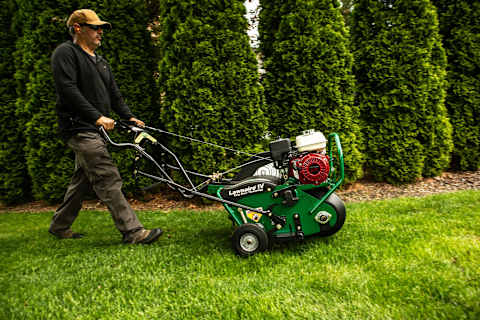
Why aerators, dethatchers, and dethatcher-overseeder machines are not interchangeable
Each machine acts on a different physical layer of the turf system, and treating them as interchangeable ways to freshen a tired surface often leads to a wasted budget. An aerator changes conditions in the soil or rootzone. A dethatcher disrupts and removes surface organic material. A dethatcher-overseeder combines that surface renovation with seed distribution, addressing two problems in a single pass. Getting the diagnosis right before comparing machines is what determines whether your renovation program succeeds.
Bobcat's turf renovation equipment range reflects that separation. The aerators, dethatchers, and the DT20 dethatcher-overseeder are built as dedicated categories, each engineered for a specific mechanical job rather than marketed as an all-purpose lawn fix.
Diagnose the problem before you choose a machine
A thin, discoloured patch can result from soil compaction, an excessive layer of surface organic matter (thatch), or a genuine loss of live turf. Each issue requires a different solution, so identifying the underlying problem before selecting a machine is essential.
Three simple checks can help distinguish between them:
- Compaction: A soil probe meets firm resistance and reveals limited pore space, indicating compacted soil.
- Excess thatch: A spongy layer of brown organic material between the turf canopy and the soil surface points to a thatch problem. A thin thatch layer is normal and can even benefit turf health, but excessive accumulation restricts water, air, and nutrient movement.
- Low plant density: If the soil is not compacted and there is no excessive thatch, but the turf is thin, patchy, or worn, the problem is likely a loss of plant density. In this case, a dethatcher-overseeder can renovate the surface while introducing new seed in a single pass.
Selecting equipment without first diagnosing the underlying issue can lead to unnecessary costs and ineffective renovation. Matching the machine to the specific condition ensures your maintenance efforts address the actual cause of turf decline rather than just the symptoms.
Choosing the right aerator for your compaction issue
Compaction relief depends on which aeration method is used, and real confusion exists between spike aeration and core removal. A solid or spike tine creates holes or narrow slits without removing soil, supporting venting and some infiltration but doing little for organic matter built up in the rootzone. A hollow-tine aerator physically removes soil cores, addressing both compaction and rootzone organic matter at the same time. Matching aerator width and tine type to the size of the area and the depth of the compaction problem avoids paying for a pass that only touches the surface.
Bobcat's walk-behind aerator lineup reflects this distinction in scale. The Bobcat AE19 aerator uses Easy Steer Technology and cast iron tine wheels in a compact frame suited to smaller lawns and tight residential access. The wider Bobcat AE26 aerator is built for deeper soil aeration across larger lawns and sports facilities.
| Model | Category | Operating width | Engine power | Best suited to |
|---|---|---|---|---|
| AE19 Aerator | Aerator | 483 mm | 2.4 kW | Compact lawns, tight residential access |
| AE26 Aerator | Aerator | 673 mm | 2.4 kW | Larger lawns, sports facilities |
Dethatchers and the dethatcher-overseeder: choosing the right level of intervention

Dethatchers and the dethatcher-overseeder: choosing the right level of intervention
Not every surface with brown material justifies aggressive scarification. Some thatch contributes resilience to a playing surface, so removal should follow measurement of a genuinely excessive layer rather than a routine calendar task.
Where light grooming is enough, the Bobcat DT18 dethatcher is a self-propelled walk-behind unit built for verticutting where a surface needs upright growth control rather than heavy material removal. Where the surface organic layer is genuinely excessive, the Bobcat DT19 dethatcher handles heavier-duty turf renovation work.
For sites where diagnosis shows both an excess thatch layer and thin turf density at once, the Bobcat DT20 dethatcher-overseeder combines dethatching action with seed distribution in a single walk-behind pass. Running one combined machine where a surface genuinely needs both operations reduces the number of separate passes and the associated debris and downtime compared with scheduling a dethatcher and a separate seeder as two unconnected jobs.
Budgeting, sequencing, and a pre-purchase checklist
Combining aeration and dethatching into a single renovation package is only justified when an independent diagnosis shows more than one underlying problem at the same time, rather than as a routine annual bundle. Before committing to a purchase, it helps to work through the same checklist a professional grounds maintenance team would use on-site.
- Confirm which physical layer — soil, surface organic matter, or plant density — is actually constraining the turf.
- Check whether an existing compact track loader, skid-steer loader, or compact tractor on site can already carry a compatible attachment, rather than requiring a separate walk-behind machine.
- Size the aerator or dethatcher to the site's area and access constraints, rather than to whichever model a supplier has in stock.
- Book a Bobcat dealer demonstration on the actual surface, using the specific walk-behind model under consideration, rather than deciding from a specification sheet alone.
- Ask about financing options through the Bobcat dealer network if spreading cost across a maintenance season is preferable to a single renovation budget.
There is no single "best" machine among aerators, dethatchers, and dethatcher-overseeders because they aren't designed for the same job. The right purchase starts with a clear diagnosis of whether the problem is in the soil, the surface organic layer, or the plant density. Once you know that, you can match a Bobcat aerator, dethatcher, or dethatcher-overseeder to your specific findings rather than buying a default package.
FAQ – Frequently Asked Questions
Does thin, patchy turf always mean I need to overseed?
No. Thin turf can result from soil compaction or excess surface organic matter rather than a genuine loss of plant density. Seeding onto a surface where the real constraint is compaction will not fix the underlying problem, so the cause has to be diagnosed first.
Is dethatching necessary before every overseeding job?
Not automatically. Some thatch is a normal part of a healthy turf profile, and dethatching should follow a measurement showing a genuinely excessive layer rather than being applied as routine practice before every seeding job.
What is the Bobcat DT20 dethatcher-overseeder?
The Bobcat DT20 dethatcher-overseeder is a walk-behind machine that combines dethatching action with seed distribution in a single pass. It suits sites where diagnosis confirms both an excess thatch layer and thin turf density at the same time, reducing the number of passes and associated downtime compared with running the two operations separately.
Which operation causes the least disruption to a surface that has to stay in use?
Solid tining creates comparatively little surface disruption compared with hollow-tine coring or scarifying, which is why it suits turf that cannot be taken out of service for long, such as a sports pitch between fixtures.
When does it make sense to use the Bobcat DT20 dethatcher-overseeder rather than a dethatcher and a separate seeder?
The DT20 dethatcher-overseeder is the right choice when diagnosis independently confirms both an excess thatch layer and thin plant density. Running a single combined machine reduces the number of passes, the volume of surface debris, and the total downtime compared with two unconnected operations.
When does it make sense to combine aeration and dethatching into one project?
Combining the two is justified only when diagnosis independently confirms more than one underlying problem — for example, compaction together with an excessive thatch layer. Treating the combination as a routine annual bundle without that confirmation risks unnecessary cost and surface disruption.
Sources and Further Reading
Disclaimer
This content is provided for general informational and guidance purposes only. It may not reflect the specific requirements, conditions, configurations, attachments, applications, terrain, weather, or operating environment relevant to every machine or situation. Any models, configurations, availability, features, and specifications mentioned are provided for illustrative purposes only and may vary by market, region, dealer, and time. Operators, owners, and customers should always assess the actual working conditions and refer to the applicable operator’s manual, service manual, technical documentation, safety instructions, and product specifications for the specific Bobcat model and equipment being used. They should also consult an authorized Bobcat dealer or qualified professional before making operational, maintenance, purchasing, or safety-related decisions.