- Home
- Buyer's Guides
- Product Buyer's Guides
- Rent, Buy, or Lease Mowers and Turf Renovation Equipment? A Practical Buyer's Guide
Rent, Buy, or Lease Mowers and Turf Renovation Equipment? A Practical Buyer's Guide
Published on: 22 September 2026
In this article:
- When renting, buying, or leasing makes sense for a mower or turf renovation machine.
- You will discover why availability and transport can matter more than the access model itself.
- How to build a decision record before speaking to a dealer.
Choosing between renting, buying, and leasing a mower, aerator, dethatcher, or sod cutter is rarely a simple price comparison. It is a decision about utilization, seasonal timing, transport, and who takes responsibility when something breaks. This guide outlines the questions you should answer before approaching a dealer. It deliberately avoids price ranges, interest rates, and financing offers, because those figures change constantly and depend on your local market. For anything involving contracts, tax treatment, or financing terms, speak with your dealer or a qualified financial advisor.
Understand the Access Models Before You Compare Them
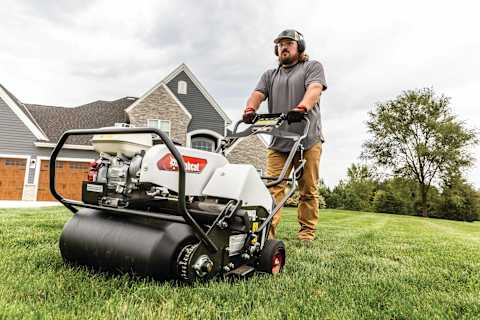
Understand the Access Models Before You Compare Them
While the terms "rent," "hire," "lease," and "buy" get used interchangeably, they represent different strategies for your business. Outright purchase means you own the machine from day one and manage every ongoing cost and decision. Short-term or seasonal hire lets you pay for a machine for a specific job without an ownership stake. Lease or contract hire sits in between, spreading access over an agreed term, with the exact structure varying by provider and country. A Bobcat dealer can compare outright purchase and short-term rental of a Bobcat machine side-by-side, so start by identifying which of these three models best fits your goals.
| Access model | What it typically means | Who tends to choose it |
|---|---|---|
| Outright purchase | Full ownership from the start, with all upkeep and resale decisions in your hands | Businesses with frequent, year-round use |
| Short-term or seasonal hire | Paying to use a machine for a specific job or season, with no ownership | Occasional or highly seasonal tasks |
| Lease or contract hire | Paying for access over an agreed term, with terms set by the individual agreement | Businesses wanting predictable access without an upfront purchase |
Measure How Often the Machine Will Actually Work
A zero-turn mower used every week has a completely different ownership case than an aerator used during one or two narrow renovation windows a year. The usefulness of any machine depends heavily on how often it works—lawn size, mowing frequency, and whether the equipment can generate additional paid work all affect whether ownership makes sense. Bobcat's turf renovation equipment range spans routine mowers through to specialist aerators, dethatchers, and sod cutters, so match each machine's access model to its own usage pattern rather than applying one rule to the whole fleet. Before comparing anything else, track productive hours, mobilization days, and how concentrated the workload is across the season.
Check Whether Your Work Window Can Tolerate a Delay
Rental suits occasional work well, but renovation tasks such as aeration and overseeding often need specific soil and weather conditions. A rental booking that is delayed or unavailable can mean missing that window entirely, with consequences well beyond the cost of the hire itself. Before booking, check the required lead time, whether a substitute machine exists if your first choice is unavailable, and what postponing the work actually costs in lost turf quality or client goodwill. Your Bobcat dealer can fill these gaps, whether through a scheduled short-term hire or by providing a Bobcat machine while yours is in for service.
Evaluate Transport, Maintenance, and Downtime Responsibility
Aerators and similar specialist machines are often bulky and require a trailer, ramps, or extra labor to move safely, so transport deserves the same attention as the machine itself.
- Renting typically shifts routine maintenance and breakdown risk to the rental provider, which is exactly why some buyers choose it for infrequently used equipment.
- Owning gives you full control over maintenance but means you carry the responsibility for storage, servicing, parts, and repair delays.
- Either way, someone has to collect, load, and return the equipment. This logistics step belongs in your decision, not as an afterthought.
BobCARE Planned Maintenance and genuine parts through the Bobcat dealer network support owned equipment, while renting a Bobcat machine through a dealer removes the maintenance question entirely for equipment you only need occasionally.
Treat Lease and Contract Hire Terms With Extra Care

Treat Lease and Contract Hire Terms With Extra Care
Lease and contract hire agreements offer a practical way to access equipment without buying it outright, but the exact mechanics differ by provider, machine category, and country. Some agreements focus purely on paying for use, while others include options that move closer to eventual ownership. Rather than assuming how a lease works, treat every term, payment structure, usage limit, insurance requirement, and end-of-term condition as something to confirm directly with the provider before signing. Since tax and accounting treatment vary by jurisdiction and agreement, seek professional advice for those specifics. Your local Bobcat dealer can walk through what a specific lease or contract hire offer actually includes.
Consider a Mixed Fleet Rather Than One Single Answer
Few operations need to answer "rent, buy, or lease" the same way for every machine. Routine mowers used weekly often make the strongest case for ownership, while deep aerators, specialist seeders, or large topdressers used briefly each year may be better suited to rental or a contracting arrangement.
- Classify each machine honestly as core (used constantly), peak-capacity (needed at busy times), specialist (rarely used but essential when it is), or emergency backup.
- Match the access model to that classification rather than to how the last machine was acquired.
- Revisit the classification periodically, since acreage, contracts, and turf standards change over time.
Bobcat's full turf renovation lineup, covering mowers, aerators, dethatchers, and sod cutters, makes it easier to combine owned core machines with rented or contracted specialist equipment.
Build a Decision Record Before You Request a Quotation
There is no single break-even utilization figure that works for every turf machine. Usage frequency, mobilization effort, maintenance capacity, storage, insurance, and expected holding period all interact differently for a mower than for an aerator.
- How many productive hours or days will this machine realistically achieve this year?
- Can our operation absorb a delay if hired equipment is unavailable?
- Who on the team can safely transport, load, and unload it?
- Who is prepared to handle servicing, damage, and unexpected downtime?
- Is this machine core to daily work, or needed only for a short seasonal window?
Bringing this record to a Bobcat dealer, rather than a target price, lets the conversation start from your actual operational picture and produces a quotation that reflects how the machine will really be used.
Conclusion
Rent, buy, and lease are not competing answers to the same question. Each fits a different combination of utilization, availability, transport, and maintenance capacity, and the right choice often looks different for a routine mower than for an occasional aerator. Working through utilization, logistics, and responsibility before contacting a dealer turns a vague price question into a clear operational brief, which is the version of this decision a Bobcat dealer can actually help with.
FAQ – Frequently Asked Questions
Is buying always cheaper than renting for turf renovation equipment?
Not necessarily. It depends on how often the machine works, how much maintenance and storage it demands, and how long you expect to keep it. There is no universal break-even rule that applies across mowers, aerators, and other turf equipment.
Does leasing always lead to eventual ownership?
No. Leasing and contract hire agreements vary by provider and country, and some are structured purely around paying for use rather than moving toward ownership. Always confirm the specific terms with the provider before signing.
How do I decide whether a machine should be owned or rented?
Start by tracking how many productive hours or days the machine would realistically achieve, then weigh that against transport requirements, maintenance responsibility, and how tolerant your schedule is of a delayed rental booking.
What should I do if a rental machine is not available when I need it?
Ask your rental provider about lead times and substitute machine availability before you rely on a booking for a narrow seasonal window, since renovation work such as aeration often depends on specific soil and weather conditions.
Can I mix owned and rented turf equipment in the same fleet?
Yes. Many operations own the machines used constantly, such as a mower, while renting or contracting for specialist or rarely used equipment such as a large aerator or topdresser.
Who is responsible for maintenance on a rented machine versus an owned one?
Rental providers typically handle routine maintenance and breakdown repair on their machines, which is one reason infrequent users choose rental. Owning a machine means the operator manages servicing, parts, and repair timing directly, supported by resources such as BobCARE Planned Maintenance.
Disclaimer
This content is provided for general informational and guidance purposes only. It may not reflect the specific requirements, conditions, configurations, attachments, applications, terrain, weather, or operating environment relevant to every machine or situation. Any models, configurations, availability, features, and specifications mentioned are provided for illustrative purposes only and may vary by market, region, dealer, and time. Operators, owners, and customers should always assess the actual working conditions and refer to the applicable operator’s manual, service manual, technical documentation, safety instructions, and product specifications for the specific Bobcat model and equipment being used. They should also consult an authorized Bobcat dealer or qualified professional before making operational, maintenance, purchasing, or safety-related decisions.