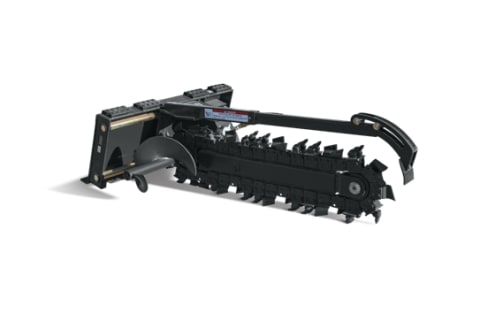
An Operator Uses a Bobcat MT120 Mini Track Loader and a Trencher Attachment on a Commercial Jobsite

Trencher and Digger Attachments

Unleash the power of Bobcat trenching attachments. Your versatile solution for utilities, irrigation, and landscaping.

MODELS
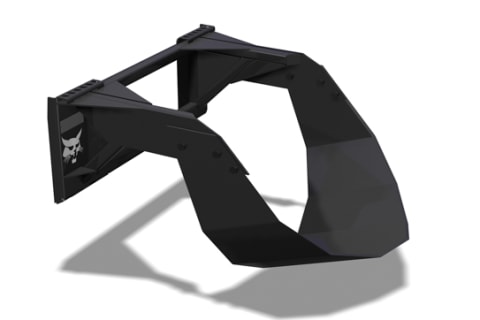
16 Attachments View All Attachments
Digger - 12S
Bobcat digger attachment.

Digger - 12S

Digger
Digger - 25"
Bobcat digger attachment.

Digger - 25"

Digger
Digger - 30"
Bobcat digger attachment.

Digger - 30"

Digger
Digger - 36"
Bobcat digger attachment.

Digger - 36"

Digger
Trencher - LT112
Bobcat trencher attachment.

Trencher - LT112

Trencher
Trencher - LT113
Bobcat trencher attachment.

Trencher - LT113

Trencher
Trencher - LT213
Bobcat trencher attachment.

Trencher - LT213

Trencher
Trencher - LT313, 3'
Bobcat trencher attachment.

Trencher - LT313, 3'

Trencher
Trencher - LT313, 4'
Bobcat trencher attachment.

Trencher - LT313, 4'

Trencher
Trencher - LT405
Bobcat trencher attachment.

Trencher - LT405

Trencher
Trencher - LT414, 4'
Bobcat trencher attachment.

Trencher - LT414, 4'

Trencher
Trencher - LT414, 5'
Bobcat trencher attachment.

Trencher - LT414, 5'

Trencher

TOP TRENCHER FEATURES

The Bobcat Trencher attachment (LT414, 4') is built for medium‑to‑heavy trenching and is designed to dig in tough, rocky soil types. It can be equipped with different teeth and chain options to match soil conditions, and multiple models are available with dig depths ranging from 2–3 feet up to 3–5 feet depending on the trencher.

HOW TO CHOOSE TRENCHING AND DIGGING ATTACHMENTS

The right Bobcat® trenching and digging attachment helps you work faster and cleaner with less hand labor. Start with the kind of line you’re installing or ground you’re opening up, then match the tool to depth, disturbance level and trench length.

Types of Work

Think about the kind of work you do most: 

  • Utilities and irrigation mains: Long, consistent runs at a set depth. 
  • Landscape and tree work: Spot digging, root work, stump and rock removal, short trenches. 
  • Low-impact utility installs in turf: Burying pipe and cable while keeping yards and finished landscapes looking clean. 
  • Pavement and street work: Cutting narrow utility trenches in asphalt and concrete with a clean, controlled cut and minimal patch width.

Once you know the primary job, it’s easier to pick between a trencher, digger or vibratory plow. 

When to Choose a Trencher

Pick a trencher attachment when you need long, consistent trenches with a clean bottom. 
  
A trencher is ideal for utility lines, irrigation, drainage and runs along buildings or fences.  
 
Side shift helps you work close to structures, while the auger and crumber manage spoil and leave a smooth trench bottom. Choose your model based on required trench depth, ground conditions and whether you need high‑flow performance. 

When to Choose a Digger

Choose a digger attachment when you need a simple, versatile tool for short runs and spot digging. 
  
The digger excels at removing rocks and stumps, transplanting trees and shrubs, pruning roots, and digging shorter trenches. It can dig in forward and reverse and is available in multiple widths and two dig depths, so you can match it to your loader and typical tasks. 

When to Choose a Vibratory Plow

Go with a vibratory plow attachment when you want buried pipe or cable with minimal ground disturbance. 
  
Mounted on a mini track loader or small articulated loader, the vibratory plow is built for sprinkler systems, low-voltage and communication lines, and light utilities in finished turf. The blade vibrates to pull pipe or feed cable through the ground, leaving only a knife-like incision while the coulter wheel and pressure foot protect surrounding sod. Choose pull or chute blade configurations and add pipe pullers, cable grips or a wire reel carrier depending on what you’re installing. 

When to Choose a Wheel Saw

Choose a wheel saw attachment when you need precise trenches cut through hard surfaces like asphalt and concrete. 
  
Powered by high-flow hydraulics, the wheel saw is ideal for road repair, street crossings and utility work in paved areas. It cuts a narrow, uniform trench with hydraulic depth control, side shift for cutting tight to curbs and walls, spoil deflectors, and trench-cleaning features that leave a clean-bottom trench ready for installation. 

Quick Checklist

  1. Primary task: Long utilities, spot digging, low-impact pipe/cable installs or pavement trenching. 
  2. Required depth and width: Based on pipe, cable, root zone and required pavement cut width. 
  3. Soil conditions: Black dirt, clay, gravel or rocky ground. 
  4. Surface expectations: Open trench vs. minimal turf disturbance vs. narrow pavement cut for easier patching. 
  5. Site constraints: Need to work close to buildings, fences or walls, or along curbs and existing pavement edges. 
  6. Carrier match: Loader or mini track loader, plus hydraulic flow and model compatibility – including high-flow requirements for wheel saw attachments. 

When you’ve narrowed it down, your local Bobcat dealer can help confirm depth, configuration and compatibility so your trencher, digger, vibratory plow or wheel saw shows up ready to work on day one. 

Search Attachments & Implements