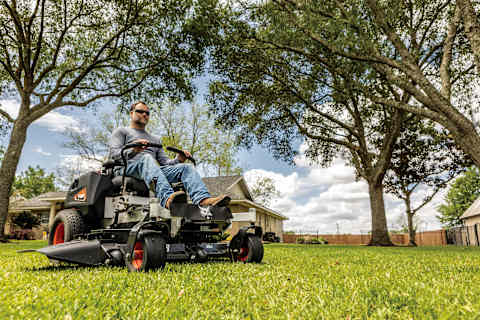
WHAT SIZE ZERO-TURN MOWER IS RIGHT FOR ME?

With hundreds of models and thousands of configurations, determining the ideal zero-turn mower size for your workload may seem like a daunting task. Despite the myriad of variables, identifying the ideal size mower comes down to answering three simple questions.

For the purposes of this article, frequency is defined as how often you mow (once a week, every day, etc); size will be defined in terms of acreage.

MOWING FREQUENCY

Are you mowing commercially or are you maintaining your own property?

Commercial operators may run individual machines in excess of 40 hours per week, maintaining varied property types from large acre campuses to smaller residential properties. As such, they need to consider professional-grade equipment that can stand up to long run times and deck sizes that have the potential to cover lots of ground in fewer passes.

A simple rule of thumb here is larger decks cover more ground faster, which matters if you’re mowing for efficiency. Smaller platforms and decks are better for compact properties where speed matters less than precision, making them ideal machines for those maintaining their own property.

When considering mower and deck size, it’s best to define which audience category you and your workload fall into:

Homeowner mowing lawn with Bobcat ZT2000 zero-turn riding mower with house in the background

Consumer Operators
Frequency: 1x per week, 0.5-1.5 hours

A consumer operator is a typical homeowner who uses equipment primarily for personal property maintenance rather than income-producing work.

They value ease of use, reliability and consistent performance. Consumer operators want dependable machines that deliver quality results with minimal complexity and straightforward ownership.

Professional operator on Bobcat ZT5000 zero-turn riding mower cutting grass in park with grass clippings flying out of mower deck

Prosumer Operators
Frequency: 2x per week, 2-5 hours

A prosumer operator is someone who uses professional-grade equipment but isn’t running a full-scale commercial operation. They may be a homeowner with large acreage, a serious property manager or a part-time contractor who demands durability, performance and cut quality beyond typical residential machines. Prosumer operators want tools that work hard, last long and deliver professional results without the complexity of managing a full commercial fleet.

Commercial operator mowing large residential yard with Bobcat ZT7000 zero-turn riding mower with trees and fence in the background

Commercial Operators
Frequency: every day, 40+ hrs/week

A commercial operator is a professional who uses equipment daily to generate income, such as a landscaper, lawn-care contractor or grounds maintenance crew.

They rely on machines that deliver maximum durability, high productivity and minimal downtime under long hours and demanding conditions. For commercial operators, equipment isn’t just a tool, it’s a business investment that must perform reliably.
What Size Mower Do I Need? 

With a wide variety of zero-turn mower sizes available, how do you figure out which size is right for you? Price conscious buyers with smaller yards may want to know what’s the smallest zero-turn mower they can find to do the job well. Buyers with large budgets and equally large yards may look for the largest zero-turn mower that can save them hours on their weekly yard maintenance.  

The most important factor in determining what size mower you need is the size of the job (in acres). Once you know how much turf you’re mowing, you can then narrow down your choices using the following guidelines. 

What size yard is best for a zero-turn mower?

Zero-turn mowers are most efficient operating on property no smaller than half an acre; anything smaller may be more easily maintained with a walk-behind mower.

What size mower is ideal for a half-acre?

A half‑acre property is typically considered a residential lawn. For this size, an entry‑level zero‑turn mower with a cutting deck width of 30-42" offers an ideal range to offer maximum maneuverability and efficiency. Allowing homeowners to cover the property efficiently while being able to navigating around obstacles.

Recommended zero-turn mower: ZT2000

What size mower is ideal for one acre?

While one acre is still considered a residential size, this acreage would require a larger mower for maximum efficiency. An entry-level machine will still accomplish the job, but look for larger deck sizes between 36-52” as they strike the perfect balance between efficiency and ease-of-storage.

Recommended zero-turn mower: ZT2000, ZT3000, ZT3500

What size mower is ideal for two acres?

A zero-turn mower equipped with a 48-52” cutting deck can take on a two acre-property, but for maximum efficiency you can go up to 60”. At this size, you’ll have the power and efficiency to take on the acreage and still have the maneuverability to navigate around obstacles. But remember: larger deck sizes require more space for storage and transportation. Be sure you have enough room for a mower of this size.

Recommended zero-turn mower: ZT2000, ZT3000, ZT3500

What size mower is ideal for three acres?  

To mow three acres, look for a mower with no less than a 52” width cutting deck, and if you have the storage space, go bigger. Power and efficiency matter most in this scenario and a larger mower will give you both. Factors such as terrain condition, mower speed and number of obstacles will impact mow time.

Recommended zero-turn mower: ZT3000, ZT3500, ZT5000, ZT6000, ZT6000e, ZT6100

What size mower is ideal for four acres?

Four acres is a significant piece of property. Unless you have an abundance of obstacles like highly manicured areas or gates that may impede a larger size mower and deck, look for a zero-turn mower with a deck width no less than 60”. If you do have multiple obstacles, perhaps consider a smaller mower for better maneuverability around the acreage. A 52” mower may be better in this scenario, but may take more time. 

Recommended zero-turn mower: ZT5000, ZT6000, ZT6000e, ZT6100

What size mower is ideal for five acres?

Whether you’re a professional mowing for profit, or maintaining your own acreage, property of this size requires a commercial-grade mower with a deck cutting width up to 72” to maximize efficiency. Pro-grade zero-turns are built for durability and performance and are able to handle thicker grass and longer run times. Outfitted with thisrecommended zero-turn mower, you should be able to accomplish the challenge in three hours or less.

Recommended zero-turn mower: ZS4000, ZT6000, ZT6100, ZT7000

What size mower is ideal for 6-10 acres?

Managing up to 10 acres of property requires a professional-grade zero-turn mower that can stand up to long hours of operation season after season. To do the job expertly, look for a cutting deck width of at least 72”. It's also recommended that you look for a mower with additional operator comfort features like high-backed seats for extra support as this job may take up to four hours depending on obstacles.

Recommended zero-turn mower: ZS4000, ZT7000

What size mower is ideal for 10 acres?

It’s important to consider all of the factors that go into managing a property this size such as obstacles, slopes and terrain gradations and storage space before making a decision. A zero-turn mower equipped with a 72” deck or larger is required, but gates and fences may limit your width. Regardless, a commercial-grade mower with high horse power, exceptional maneuverability and maximum durability is required. This is a job that could take up to five hours start-to-finish.

Bobcat Mowers: ZS4000, ZT7000

OBSTACLES AND LIMITATIONS

There are obstacles and limitations that may limit the type of mower and deck you select.

Gates and Narrow Pathways

As a general rule of thumb, there should be 2-4” of clearance on either side of your mower deck and discharge chute when passing through a gate or fence. Be sure the size of the mower can safely pass through these areas before making a decision.

Landscaping

Larger mowers and decks perform well in wide-open spaces. Highly manicured areas like gardens and beds with multiple curves and turns may limit the performance of a larger mower or deck.

Slopes

Slopes with steep inclines can represent a safety hazard for zero-turn mowers. Always check your owner’s manual to assure you are operating safely.

Storage and Transportation

You don’t want your new mower sitting outside exposed to the elements. Nor do you want a machine too large to fit on your trailer. Be sure you have enough space to properly store and transport your zero-turn mower before making a purchase decision.

As all of these factors are general rules of thumb, remember that your local dealer can be a valuable resource when considering all of the factors associated with finding the right mower.

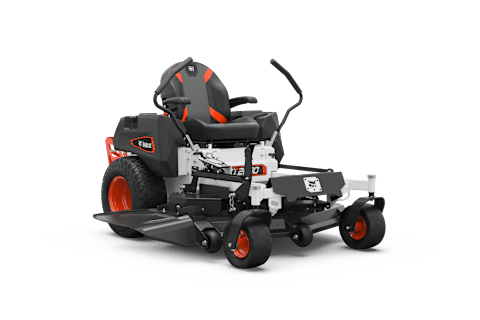
Bobcat ZT2000 zero-turn riding mower 3/4 front right studio knockout

What is the smallest zero-turn mower?

The smallest zero-turn mower will come equipped with a 30” deck - that’s a significant increase over a typical walk-behind mower. If you’re in the market for a zero-turn mower you’ll want a machine that can deliver efficiency, reliability and results, so expect to spend about $5,000-$6,000.

The smallest zero-turn mower Bobcat offers is the ZT2000.

Bobcat ZT7000 zero-turn riding mower 3/4 front right studio knockout

What is the largest zero-turn mower?

Typically the largest zero-turn mower comes equipped with a 72” deck, though you’ll find 120” zero-turn mowers being used by lawn and landscape businesses to manage parks, municipalities and large campuses. These are powerful, commercial-grade machines that come with additional durability and operator comfort features and start around $15,000. 


The largest zero-turn mower Bobcat offers is the ZT7000.

Continue Your Mower Journey

While all of this information details the right size mower to meet the needs of your workload, it doesn’t account for your wants (there’s certainly nothing wrong with having a larger mower purely for bragging rights).

Bobcat offers a full-line up of purpose-built zero-turn mowers designed to expertly tackle the demands of home-owners with acreage, and commercial operators mowing seven days a week. The same durability and precision can be found in the Bobcat stand-on zero-turn mowers and Bobcat walk-behind mowers, giving you a wealth of options to match your mowing challenges. Finding and purchasing a zero-turn mower is not an impulse decision, especially when you consider your unique set of circumstances and challenges.

To learn more about Bobcat zero-turn mowers contact your nearest authorized Bobcat dealer or continue your mower journey with the resources below.