How to Build a Safety Mindset at Your Company

Published on January 6, 2015

Whether you’re operating equipment or in charge of training others to use it, understanding and practicing equipment safety helps everyone work safer, faster and more efficiently on the jobsite. Workplace safety can lead to better overall performance and project profitability, and most important, it reduces the risk of injury to you and other workers or damage to the equipment or other property.

Building a safety mindset requires a shared responsibility at all levels of your company and a commitment to:

  • Proper training for new employees and refreshers for current employees
  • Daily safety integration
  • Continuous improvement
  • Positive reinforcement

A safety culture starts with management and operational team members who treat safety and health as an investment, not a cost, and who value safety and demonstrate model behaviors.

Educating your operators on machine capabilities and safe operation is the key to reducing risks on the jobsite. The amount you invest in safety education and training can reap dividends in increased performance and profitability — not to mention the decreased negative consequences of a careless work environment — injuries, insurance claims, lost revenue or even worse.

Knowing how a machine works, realizing its capabilities and limitations, and exercising appropriate behavior inside and around the machine can help minimize the risk of accidents.
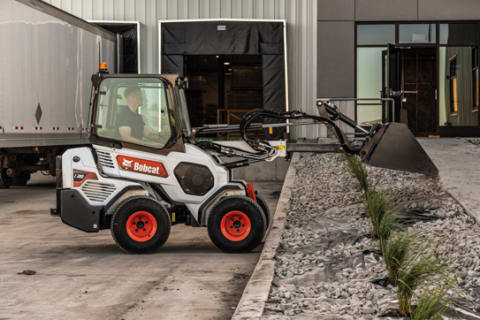
Universal Safety Guidelines for Compact Equipment

  • Always read and understand the Operation & Maintenance Manual before operating.
  • Follow the warnings and instructions on machine safety signs to avoid situations that can cause serious injuries or death.
  • Make sure your machine is properly maintained following the manufacturer’s instructions.
  • Never modify the machine or used attachments that are not approved by the manufacturer.
  • Wear tight-fitting clothing that cannot get caught on controls or working components inside and outside of the machine.
  • Always use the designated grab handles and steps when entering or exiting the machine and maintain three points of contact.
  • Securely fasten the seat belt before operating.
  • Pay close attention to all warning lights and gauges.
  • Never attempt to start the engine or operate the controls from outside the machine.
  • Always look in the direction of travel (including to the rear before backing up) and check each side before swinging or turning the machine.
  • Operate at a low speed in an area without bystanders until you are comfortable using the machine and can operate the machine and attachment safely under all work area conditions.
  • Never allow riders on the machine.
  • Keep all body parts inside the operator area while operating.
  • Be aware of overhead power lines, underground lines or obstacles.
  • Make sure proper ventilation is provided if working in an enclosed area or building.
  • Do not overload or exceed the machine’s rated operating capacity or load limits.
  • Travel slowly uphill or downhill, with the heavy end of the machine uphill. (When loaders or handlers are empty, the heavy end may be the rear of the machine.)
  • Avoid sudden stops or turns, steep slopes, drop-offs, rocks, culverts and stumps.
  • Before leaving the operator area, lower all equipment to the ground, engage the parking brake (if equipped) and stop the engine. Make sure all controls are in the neutral or parked position.

Safety Resources for Operators and Mechanics

A manufacturer’s Operation & Maintenance Manual is the ideal source for machine-specific operation and maintenance information. Bobcat Company also offers operator training course kits and safety videos, in both English and Spanish, designed to improve safety and productivity at your company.

Safety manuals from the Association of Equipment Manufacturers (AEM) are another great resource to promote safety awareness. These manuals point out some basic safety situations which may be encountered during normal operation and maintenance, and suggest possible ways of dealing with those conditions.

Explore More Loader Resources

View All Articles
  • Top Attachments for Mini Track Loaders
    Bobcat MT100 Mini Track Loader with Log Grapple Attachment Working in Wooded Area

    Top Attachments for Mini Track Loaders

    Discover the top attachments from the 24 available for the Bobcat Mini Track Loaders for job-specific landscaping, grounds maintenance and forestry challenges.
  • Small Articulated Loaders Productivity for Grounds Maintenance
    Bobcat L28 Small Articulated Loader with Bucket Attachment Moving Rock

    Small Articulated Loaders Productivity for Grounds Maintenance

    Learn about how versatile and powerful small articulated loaders increase productivity and their advantages for ground-maintenance and landscaping professions.
  • How Much Does a Skid-Steer Loader Weigh?
    Bobcat Pro S76-2 skid-steer loader traveling across construction jobsite carrying a pallet of concrete pavers

    How Much Does a Skid-Steer Loader Weigh?

    Discover how much skid-steer loaders weigh, from smallest to largest models, and what factors to consider when comparing machine weight.
  • Classic vs Pro Loaders: Compare Packages
    Bobcat T66-2 compact track loader with landplane attachment and Bobcat T595 compact track loader with auger attachment parked on jobsite with operator admiring machines

    Classic vs Pro Loaders: Compare Packages

    Explore Bobcat Classic and Pro loader packages and compare available configurations to find the right features for your work and operating needs.
  • Bobcat Classic vs Pro Loaders: Compare Performance Specifications
    Bobcat T595 classic compact track loader with auger attachment and Bobcat T66-2 pro compact track loader with landplane attachment sitting side-by-side on a home construction jobsite

    Bobcat Classic vs Pro Loaders: Compare Performance Specifications

    Learn how to compare Bobcat Classic and Pro loaders by capacity, size, lift path, hydraulic flow and other specifications to choose the right machine.
  • Classic vs Pro Loaders: Differences Explained
    The Bobcat Classic T450 and Pro T66-2 compact track loaders with grapple attachments adjacent from each other

    Classic vs Pro Loaders: Differences Explained

    Learn the differences between Bobcat Classic and Pro loaders, including controls, technology, comfort, uptime, attachments and packages, to find the right loader for you.
  • Bobcat R-Series Loader Compatibility Software Update
    Front left quarter view of an operator grading a dirt road at the fairgrounds using a grader attached to a Bobcat T86 Compact Track Loader

    Bobcat R-Series Loader Compatibility Software Update

    Explore the software update with the same software featured on the new Pro and Classic lineup for 2023-2026 Bobcat R-Series Loaders for enhanced controllability and four drive modes.
  • Landscaping Attachments for Compact Loaders
    Bobcat T66 Compact Track Loader with Auger Attachment Drilling Into the Ground

    Landscaping Attachments for Compact Loaders

    Explore the top landscaping attachments for your compact loaders, like compact track loaders for versatile productivity and power on the job.
  • Bobcat Attachments for Concrete Work with Compact Loaders
    An operator pouring concrete at a construction site using a concrete mixer attached to a Bobcat S650 Skid-Steer Loader

    Bobcat Attachments for Concrete Work with Compact Loaders

    Learn why Bobcat loaders are the machines of choice for concrete contractors with the productivity increase of Bobcat attachments specifically for concrete work.
  • How Compact Loaders are Beneficial for Forestry Work
    An operator removing a dead tree using a root grapple attached to a Bobcat T770 Classic Compact Track Loader

    How Compact Loaders are Beneficial for Forestry Work

    Learn how Bobcat compact track loaders and skid-steer loaders provide versatility with attachments and machine power to increase your productivity for forestry work.